25 Best Japandi Bedroom Inspiration: Minimalist, Cozy, and Timeless Design
A Japandi bedroom is more than just a trend—it’s a sanctuary where Japanese minimalism meets Scandinavian coziness. The design celebrates simplicity, natural materials, and muted tones, creating a space that feels peaceful yet functional. Whether your room is large or small, integrating Japandi principles can instantly transform your bedroom into a serene escape from the chaos of everyday life. From furniture choices to lighting and textures, each detail plays a part in achieving that perfect balance between elegance and comfort.
Every element in a Japandi bedroom serves a purpose, and the beauty lies in its restrained approach. You don’t need extravagant décor or bright colors to make a statement. Instead, thoughtful choices in wood textures, soft fabrics, and natural light create an atmosphere that feels both warm and airy. The appeal of Japandi design is its timelessness—it doesn’t chase trends, it enhances your lifestyle by encouraging calm, mindful living. Below, we explore 25 ideas to help you craft the ultimate Japandi bedroom.
Embrace a Neutral Color Palette
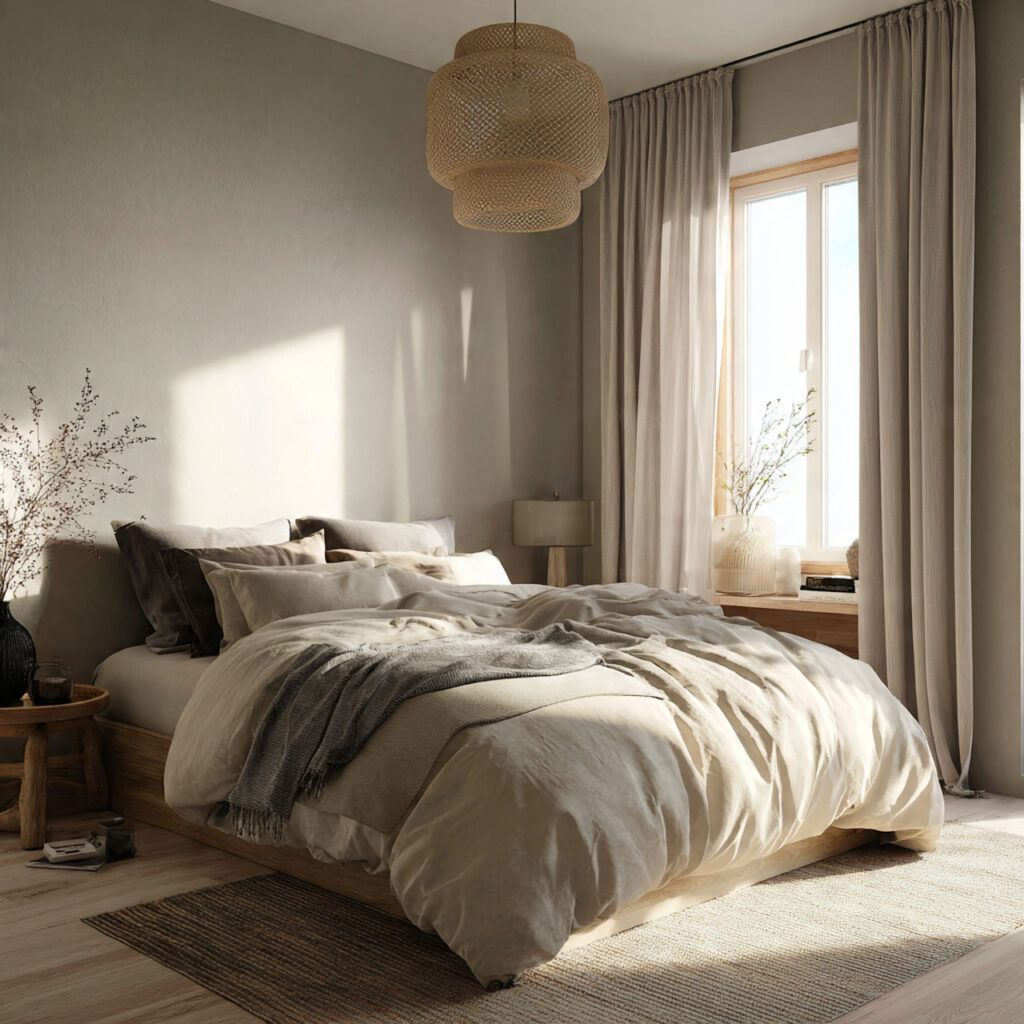
A soft, neutral color palette forms the foundation of a Japandi bedroom. Shades like beige, taupe, soft gray, and muted browns create a serene backdrop that instantly soothes the mind. These tones allow natural light to reflect beautifully around the room, making even smaller spaces feel open and airy.
You can add subtle contrasts with charcoal accents or muted greens from indoor plants. The goal is to keep the visual clutter minimal while introducing depth and warmth. Walls, rugs, and bedding in these tones will tie the entire room together seamlessly.
Invest in Low-Profile Furniture
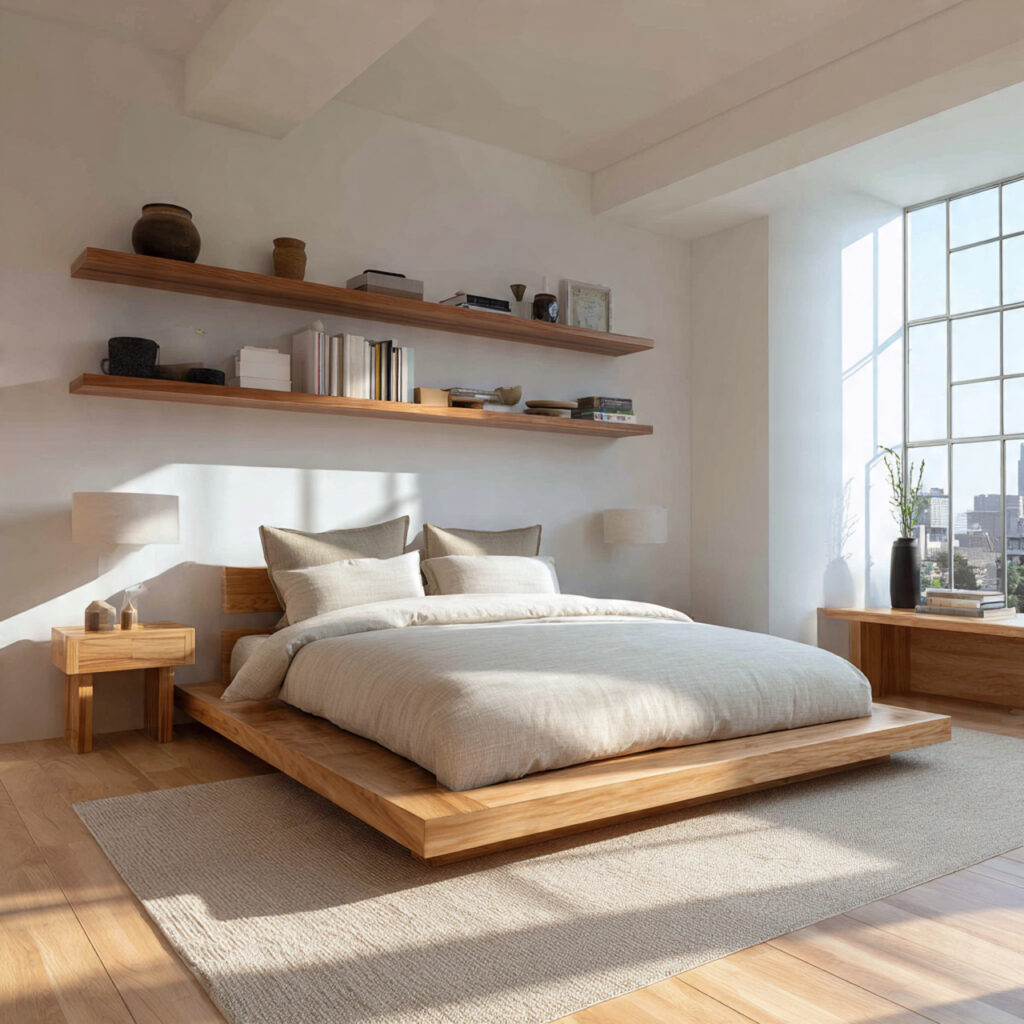
Low-profile furniture, such as platform beds or minimalist wooden frames, is a hallmark of Japandi bedrooms. These pieces create a sense of openness and keep the focus on simplicity rather than excess. A low bed also draws the eye horizontally, which makes the room feel larger.
Pair your furniture with clean lines and functional storage. Scandinavian-inspired pieces like floating nightstands or sleek dressers complement Japanese minimalism perfectly, ensuring your bedroom remains organized without feeling cramped.
Layer Natural Textures
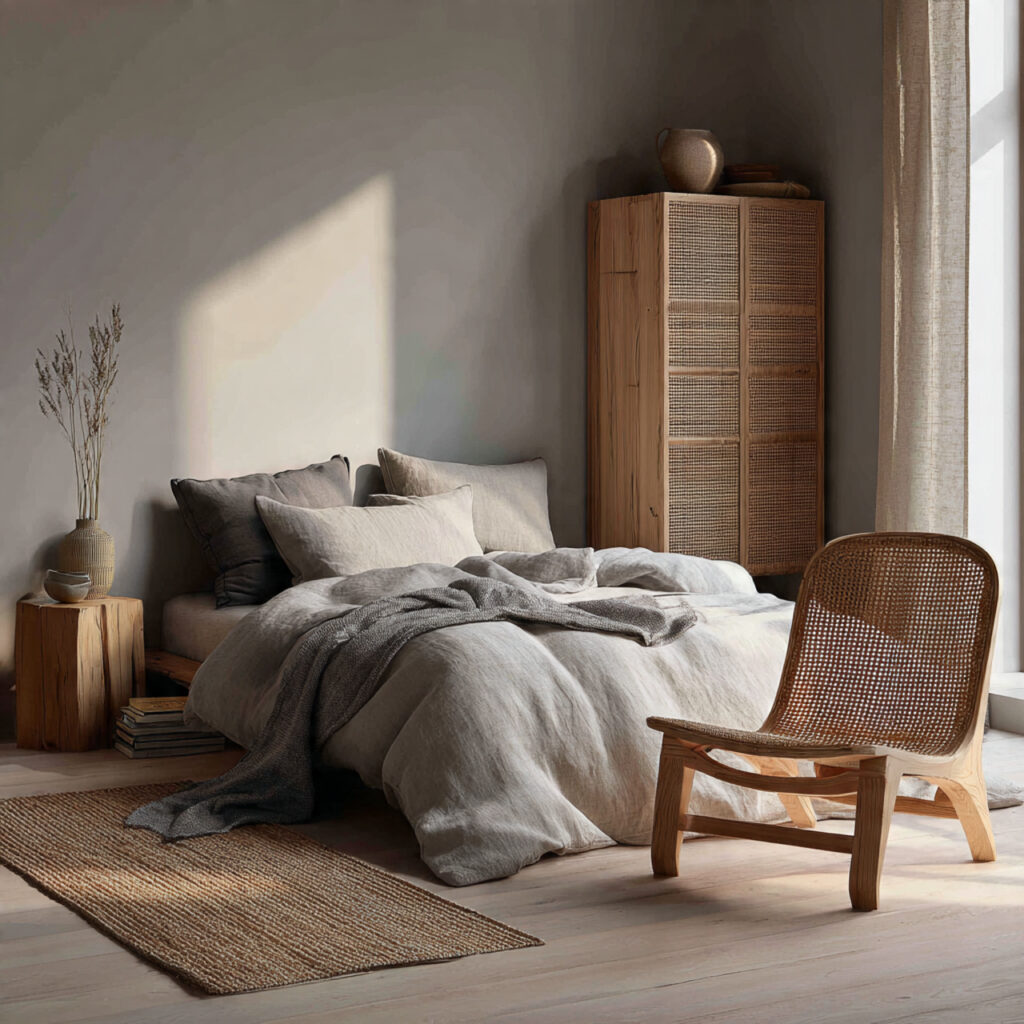
Texture is a subtle but powerful way to bring life into a Japandi bedroom. Incorporate materials like linen, cotton, wool, and bamboo to create warmth without adding visual clutter. A woven rug or linen bedding can elevate the space instantly.
Consider layering different textures carefully. For instance, a wool throw over linen sheets or a bamboo mat under a soft rug introduces tactile comfort, reinforcing the cozy yet minimal aesthetic that defines Japandi style.
Introduce Soft Ambient Lighting
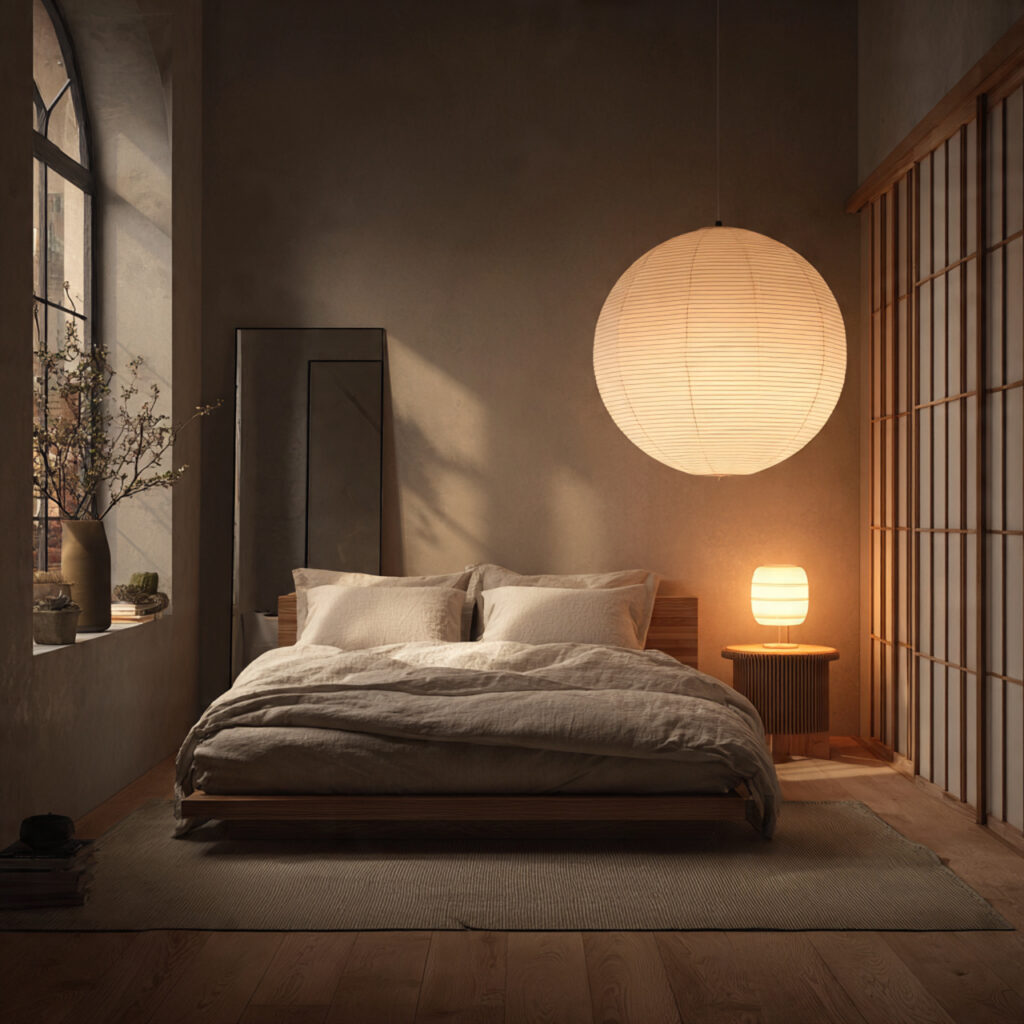
Lighting in a Japandi bedroom is all about softness and warmth. Avoid harsh overhead lights; instead, opt for pendant lamps, lantern-style fixtures, or table lamps with warm-toned bulbs. Rice paper lamps are particularly popular, adding a subtle glow and organic feel.
Strategically placed lamps can highlight natural textures and create pockets of cozy light for reading or relaxing. The right lighting enhances the tranquility of the space while maintaining the minimalist aesthetic.
Keep the Space Clutter-Free
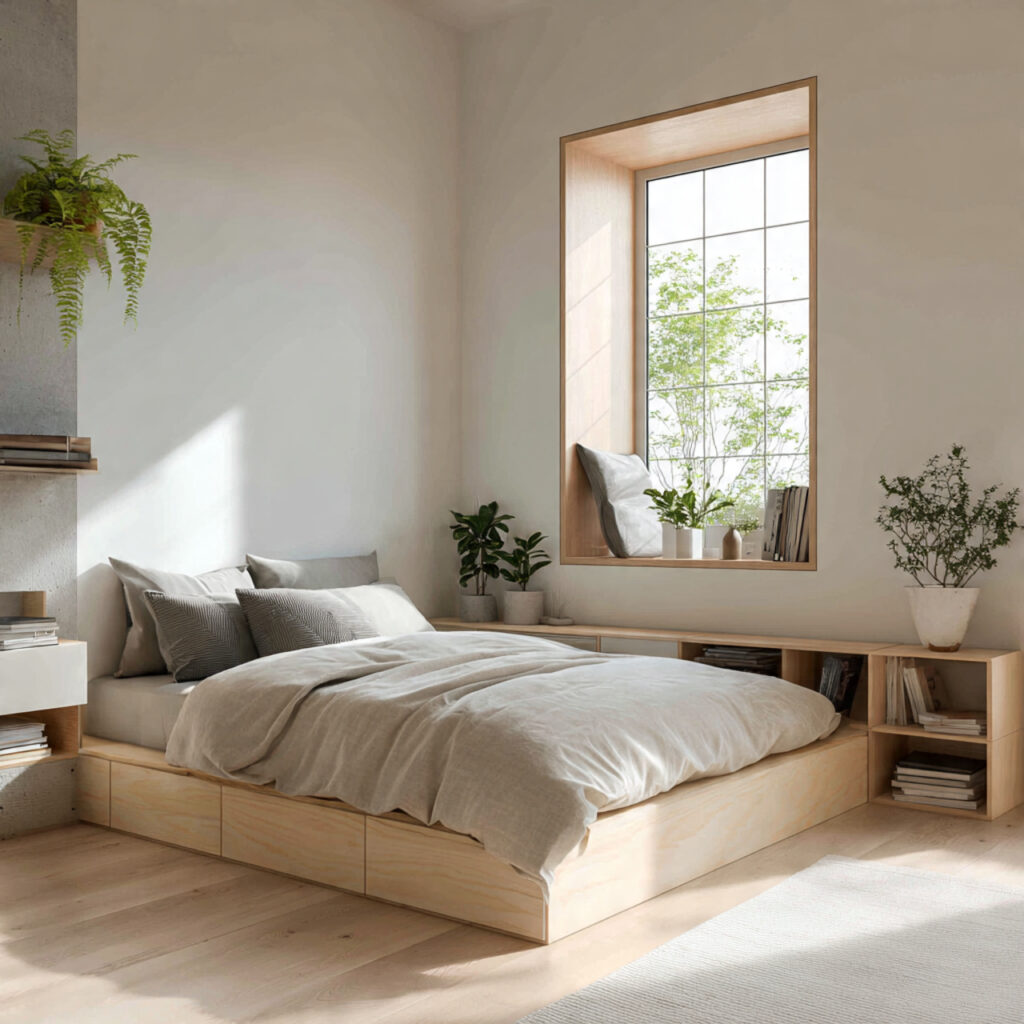
Minimalism is at the heart of a Japandi bedroom, and clutter disrupts the calm energy. Use smart storage solutions such as under-bed drawers, built-in shelving, and multipurpose furniture to keep personal items out of sight.
Adopting a clutter-free mindset also encourages better mental clarity. By regularly decluttering and simplifying your belongings, the bedroom becomes a haven of calm where you can truly unwind at the end of the day.
Highlight Natural Wood Elements
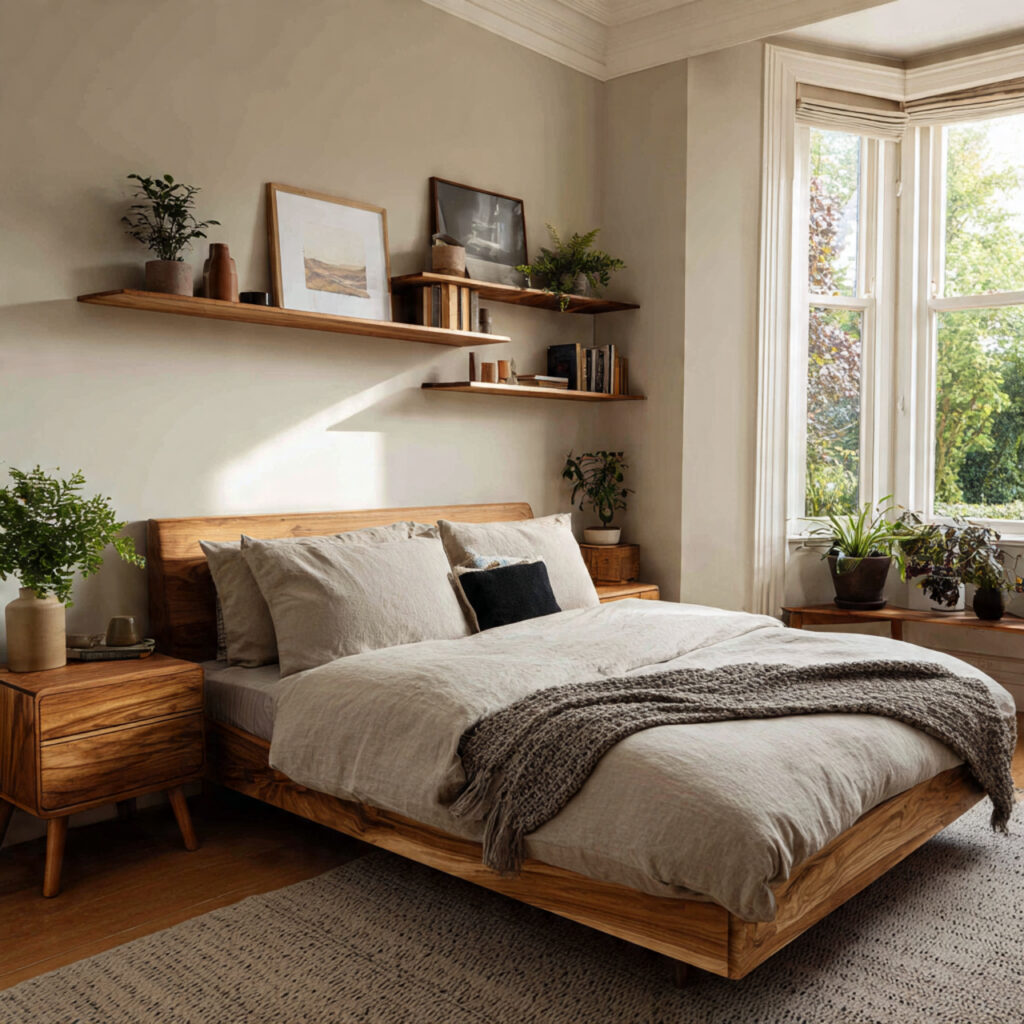
Wood is essential in a Japandi bedroom, bridging the warmth of Scandinavian design with Japanese craftsmanship. Think oak, walnut, or bamboo furniture, flooring, and accent pieces that bring nature indoors.
Wooden bed frames, nightstands, and shelves provide a grounding effect. Even a wooden picture frame or small décor piece can add a subtle layer of organic beauty to the space.
Integrate Indoor Plants
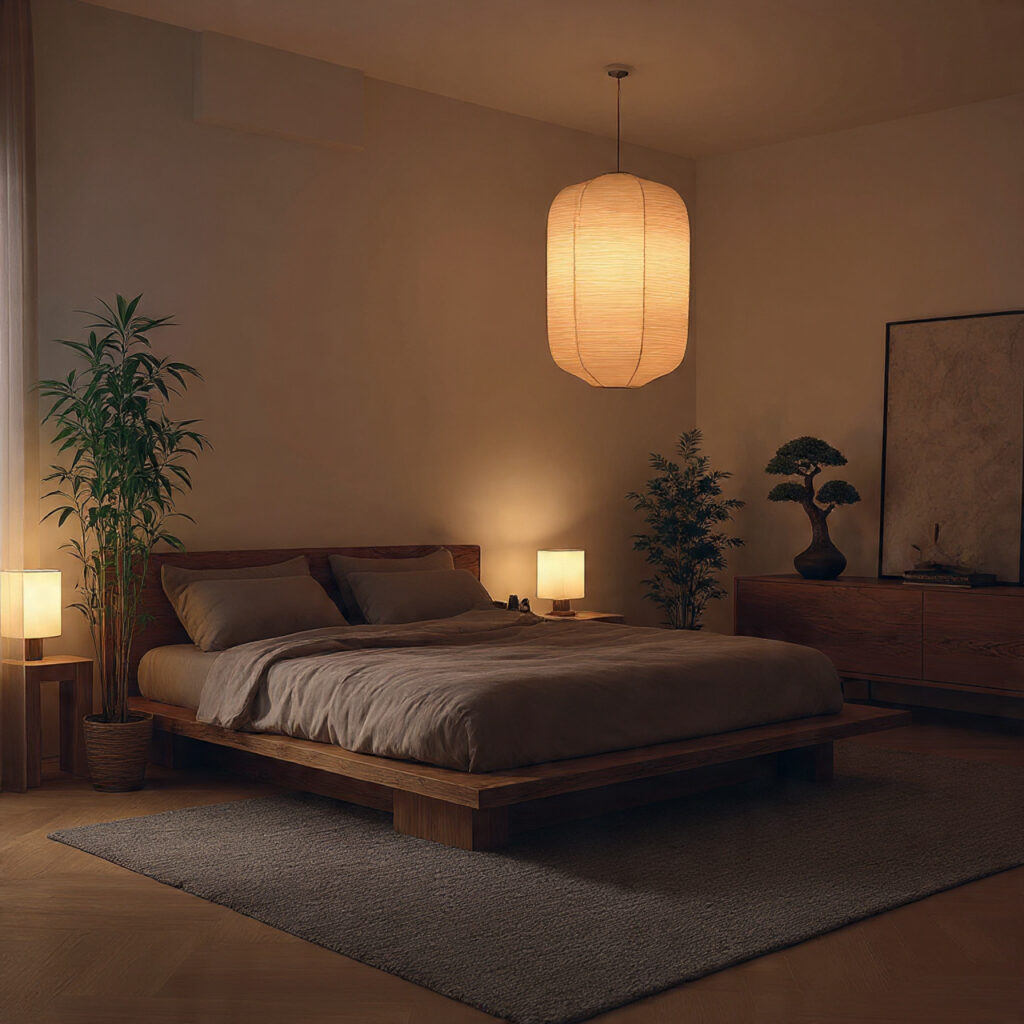
Plants are more than decoration—they promote relaxation and cleaner air. Bonsai trees, bamboo, or simple potted plants add life and serenity to a Japandi bedroom without overwhelming the minimalist design.
Choose plants that require minimal maintenance and place them where natural light enhances their presence. Greenery introduces a calming rhythm and a subtle connection to nature, which is central to Japandi aesthetics.
Opt for Low-Maintenance Flooring
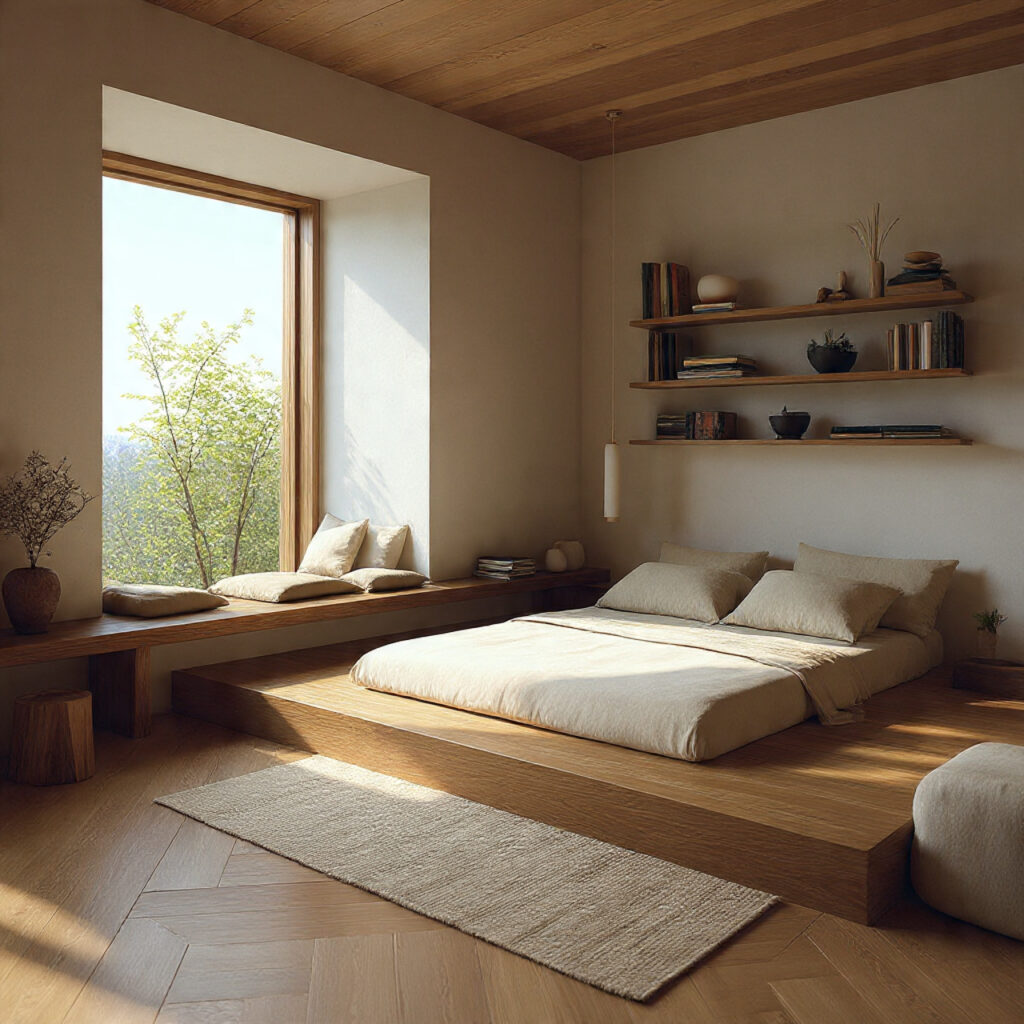
Flooring in a Japandi bedroom should complement the neutral palette while being easy to maintain. Light-colored wooden floors or bamboo panels are ideal. They provide warmth underfoot and pair beautifully with textured rugs.
Avoid overly glossy or reflective surfaces, which can distract from the calming atmosphere. Natural, matte finishes reinforce the grounded, organic feel of the space.
Choose Minimalist Artwork
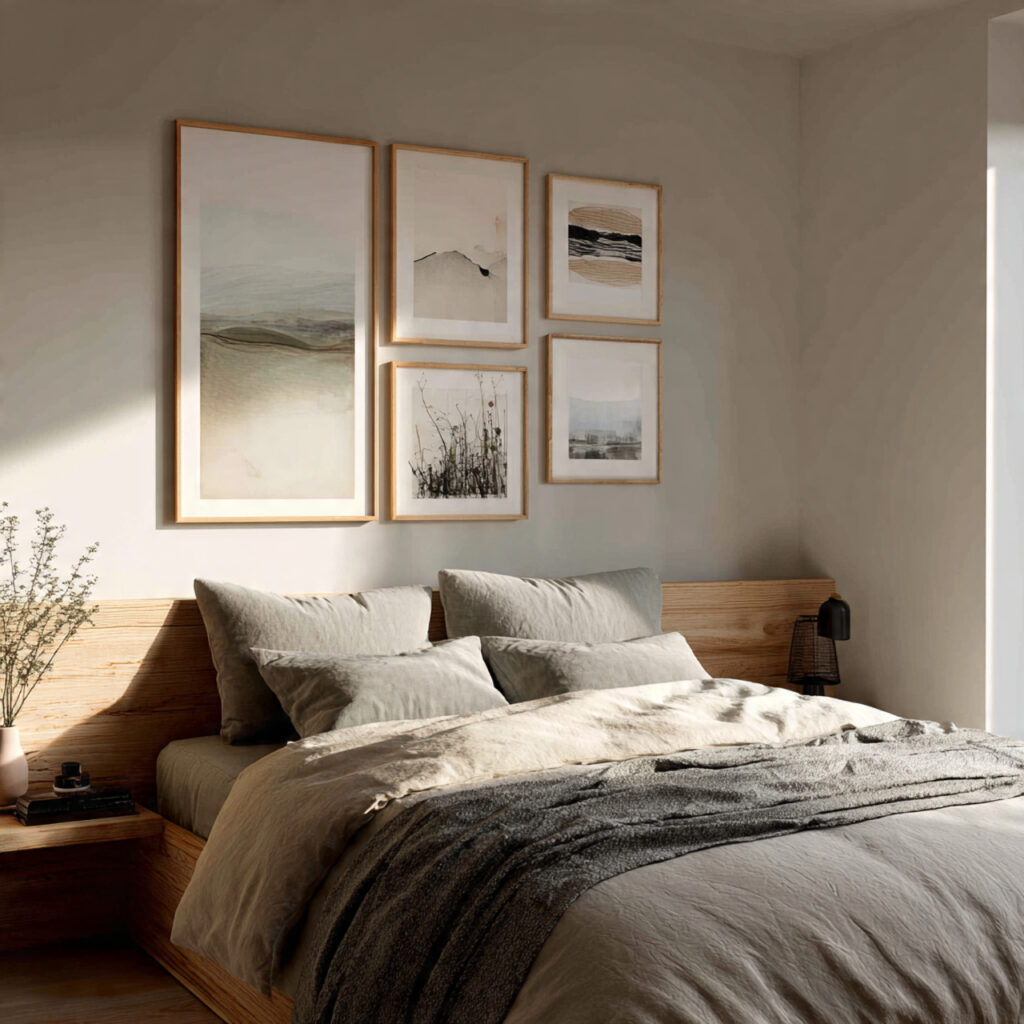
Art in a Japandi bedroom should be simple and intentional. Neutral-toned prints, abstract shapes, or single-statement pieces work best. Avoid cluttering the walls with too many items.
Even a small, handcrafted ceramic or wooden sculpture can become a focal point without overwhelming the room. The principle is to create calm, balanced visuals rather than flashy displays.
Use Sliding Doors or Screens
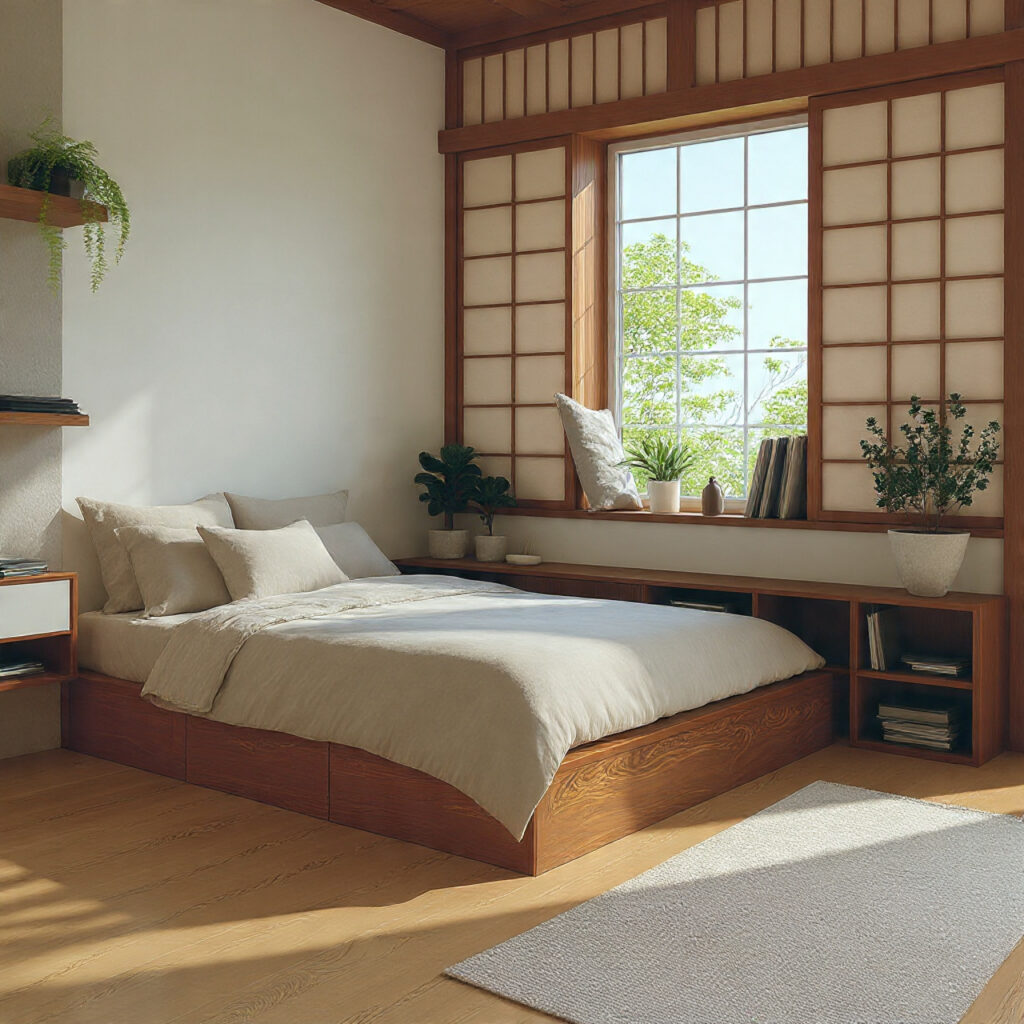
Shoji screens or sliding doors are classic Japanese design elements that fit seamlessly into a Japandi bedroom. They maximize space, add privacy, and contribute to the minimalist aesthetic.
These screens can separate areas, hide storage, or simply act as decorative partitions. The translucent panels also soften natural light, enhancing the serene ambiance.
Add Cozy Bedding
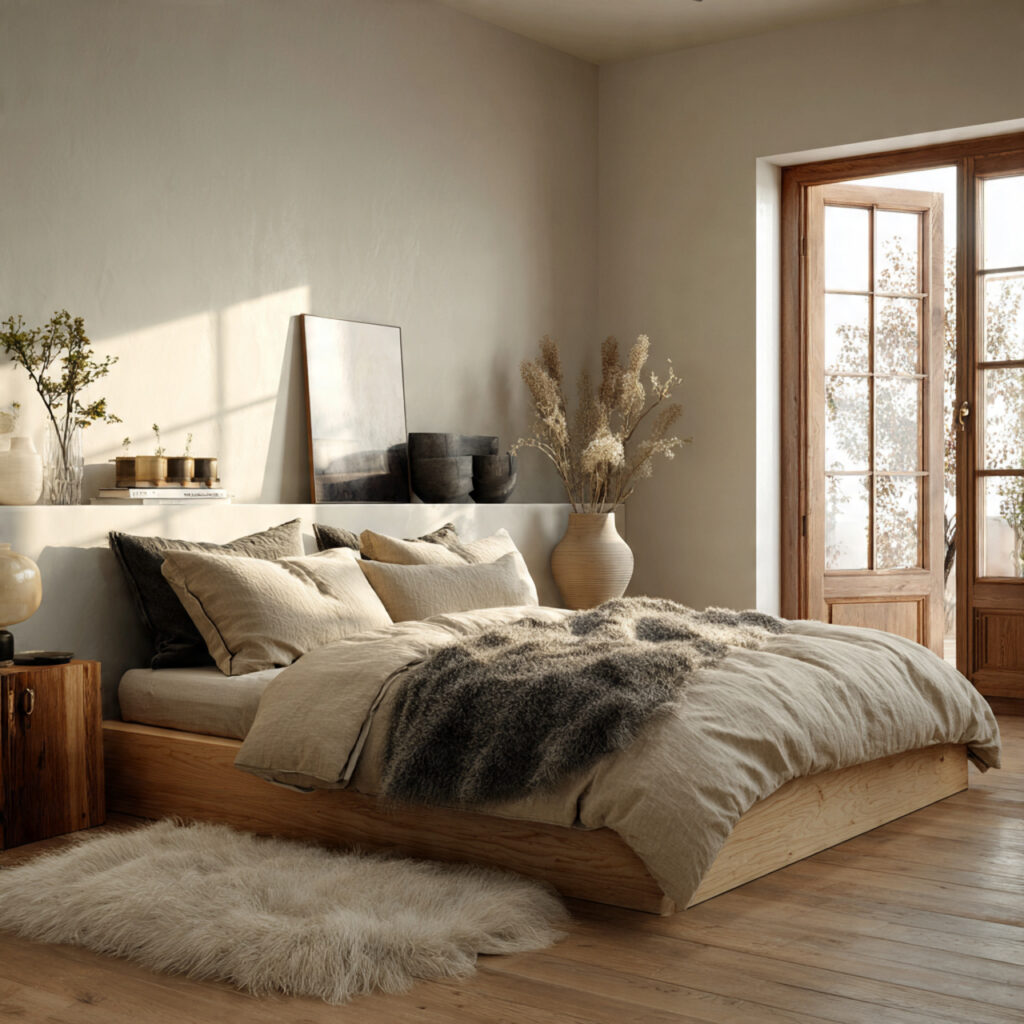
A Japandi bedroom thrives on comfort that doesn’t feel heavy. Linen sheets, cotton duvet covers, and wool throws combine softness with simplicity. Neutral colors ensure the bedding blends harmoniously with the rest of the room.
Layering bedding thoughtfully allows for visual interest without clutter. Mix textures, not colors, for depth, keeping the overall look calm and balanced.
Incorporate Functional Furniture
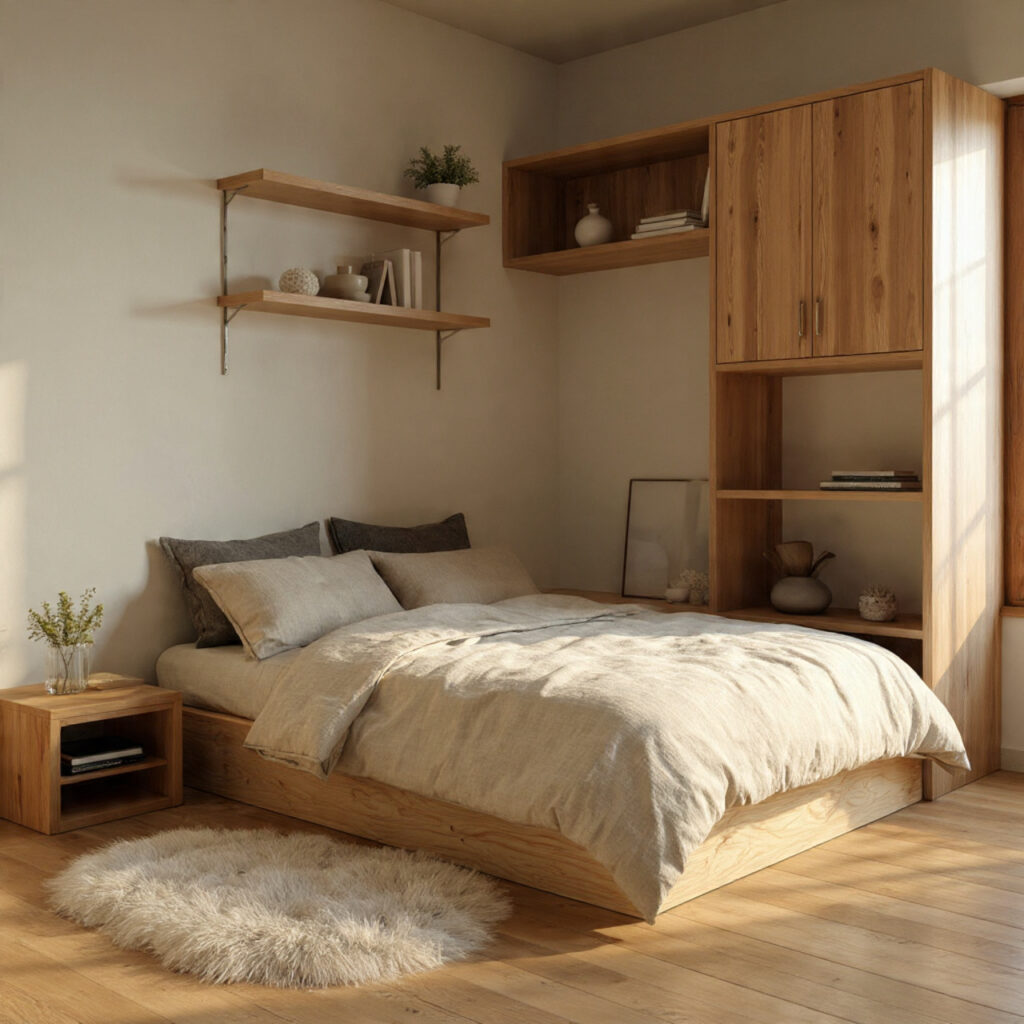
Functionality is key in Japandi design. Choose furniture that serves multiple purposes, like a bed with storage drawers or a bench that doubles as a nightstand. Every item should have a clear purpose.
This approach reduces clutter and promotes a mindful environment. It also aligns with the Japandi principle that beauty lies in utility and simplicity.
Add Subtle Accent Colors
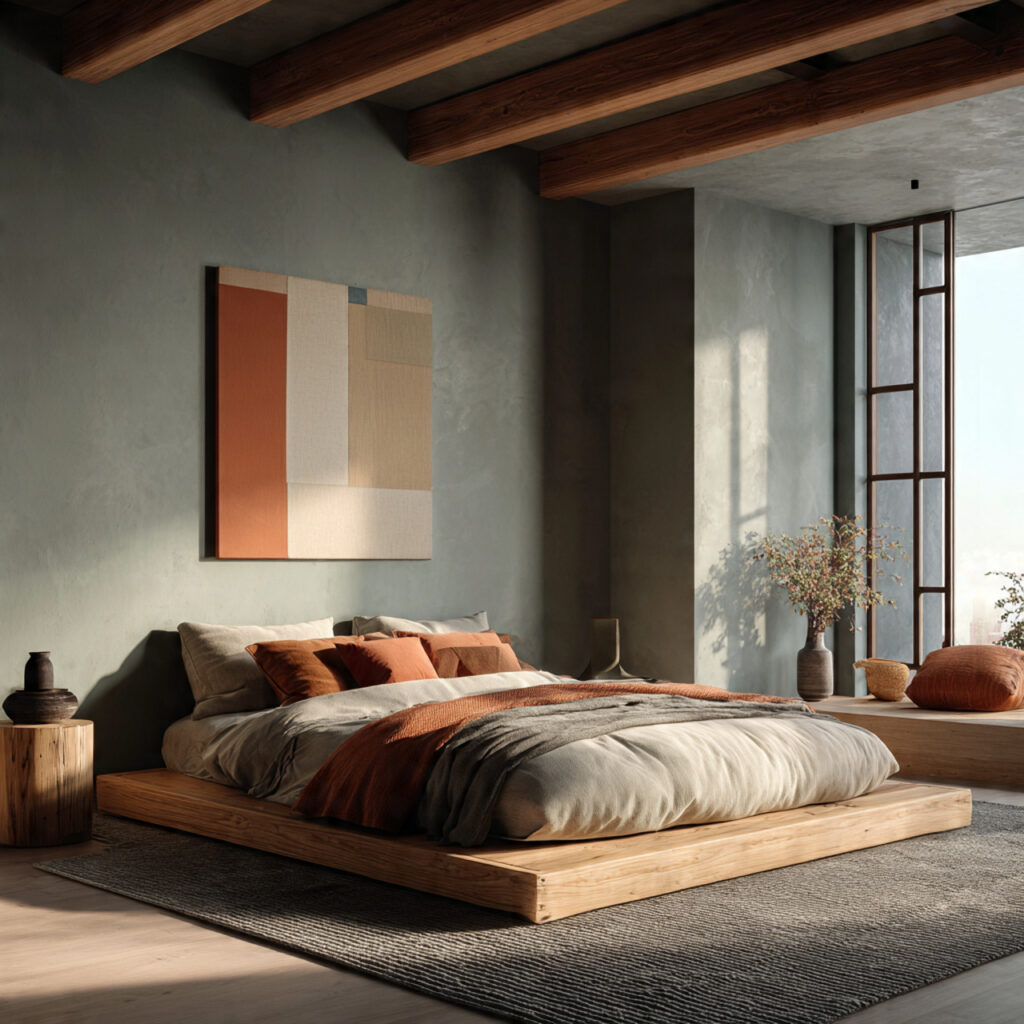
While the primary palette is neutral, subtle accent colors can bring personality. Soft greens, muted blues, or warm terracotta tones complement the natural shades without breaking harmony.
Accent colors are best used sparingly—in pillows, small décor items, or artwork—so the room remains soothing and uncluttered.
Use Mirrors Strategically
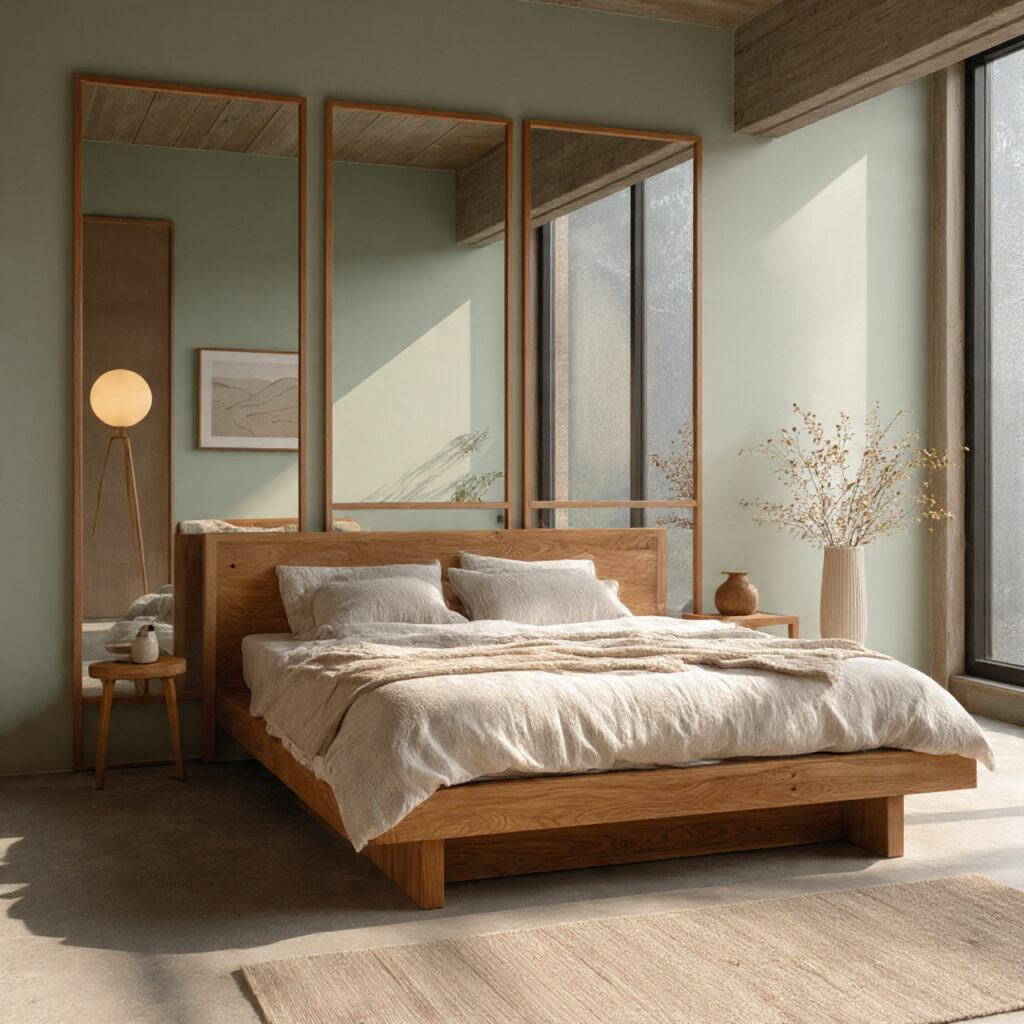
Mirrors can amplify natural light and make a Japandi bedroom feel more spacious. Simple, wooden-framed mirrors align with the design philosophy while reflecting the room’s calm vibe.
Avoid ornate or heavily decorated frames. The goal is subtle enhancement, not visual distraction, allowing the focus to remain on the room’s natural textures and clean lines.
Introduce Japanese-Inspired Décor
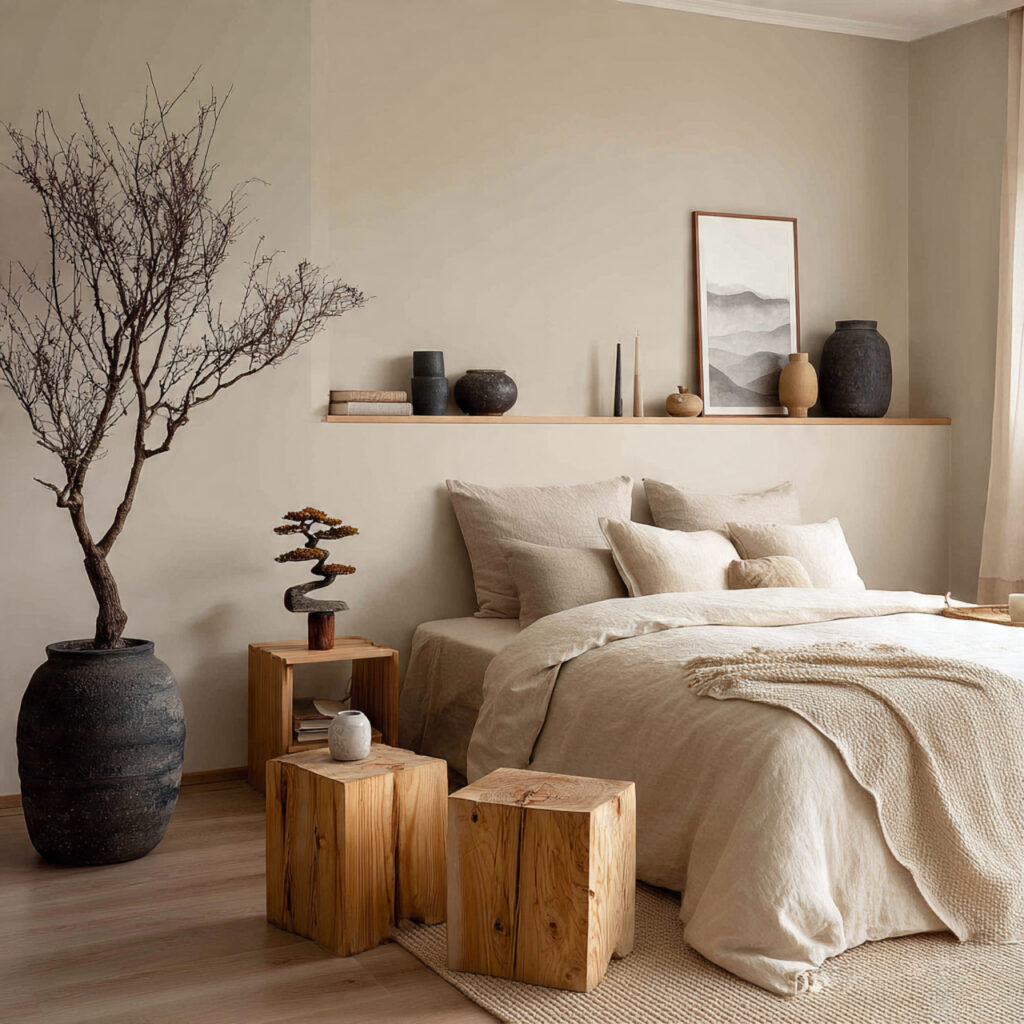
Small Japanese touches, like ceramic vases, bonsai, or low wooden stools, reinforce the style without overwhelming it. The beauty is in their simplicity and functional design.
These accents bring authenticity and balance to the Scandinavian warmth, creating a space that feels curated yet lived-in.
Prioritize Airy Window Treatments
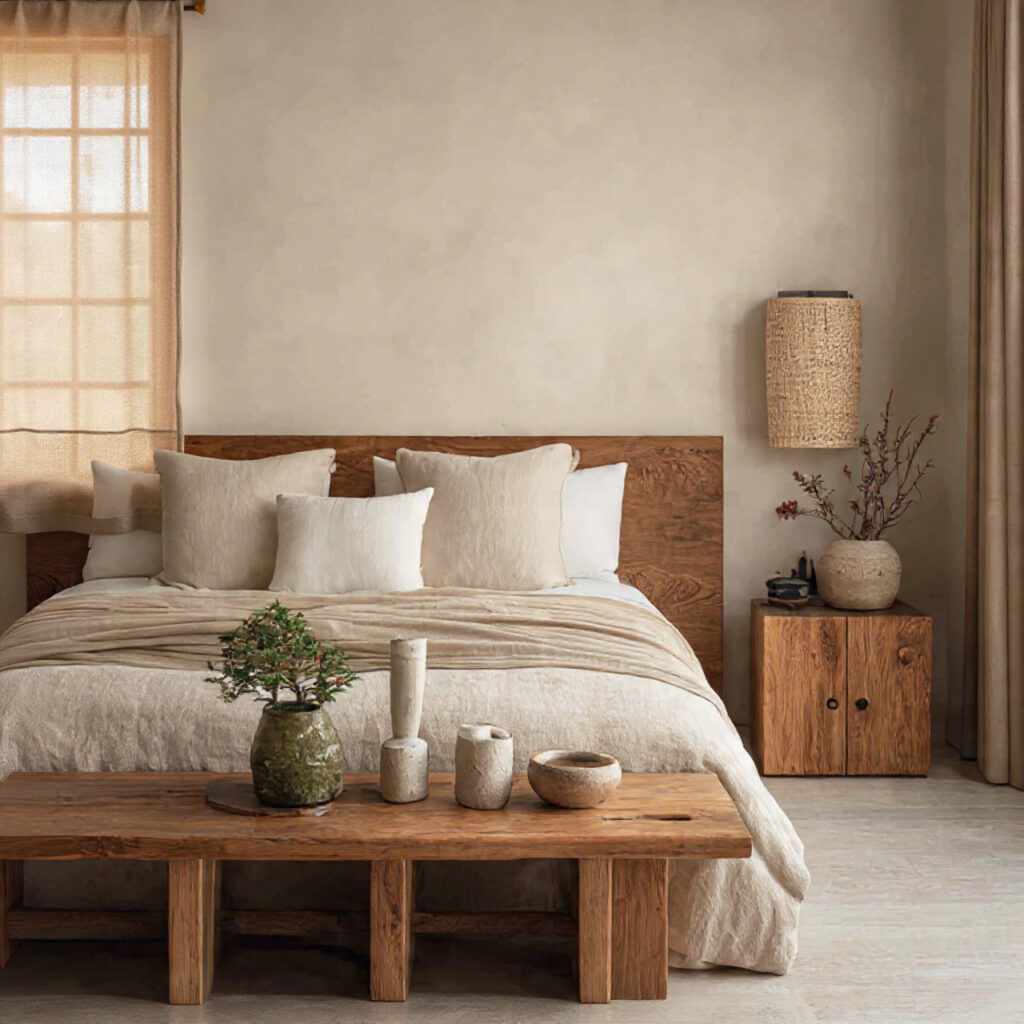
Light, airy curtains or bamboo blinds allow natural light while maintaining privacy. Heavy drapes disrupt the minimal, open feel central to Japandi bedrooms.
Translucent fabrics diffuse sunlight, keeping the room bright and calm. Pair with neutral colors to maintain a cohesive palette.
Keep Technology Minimal
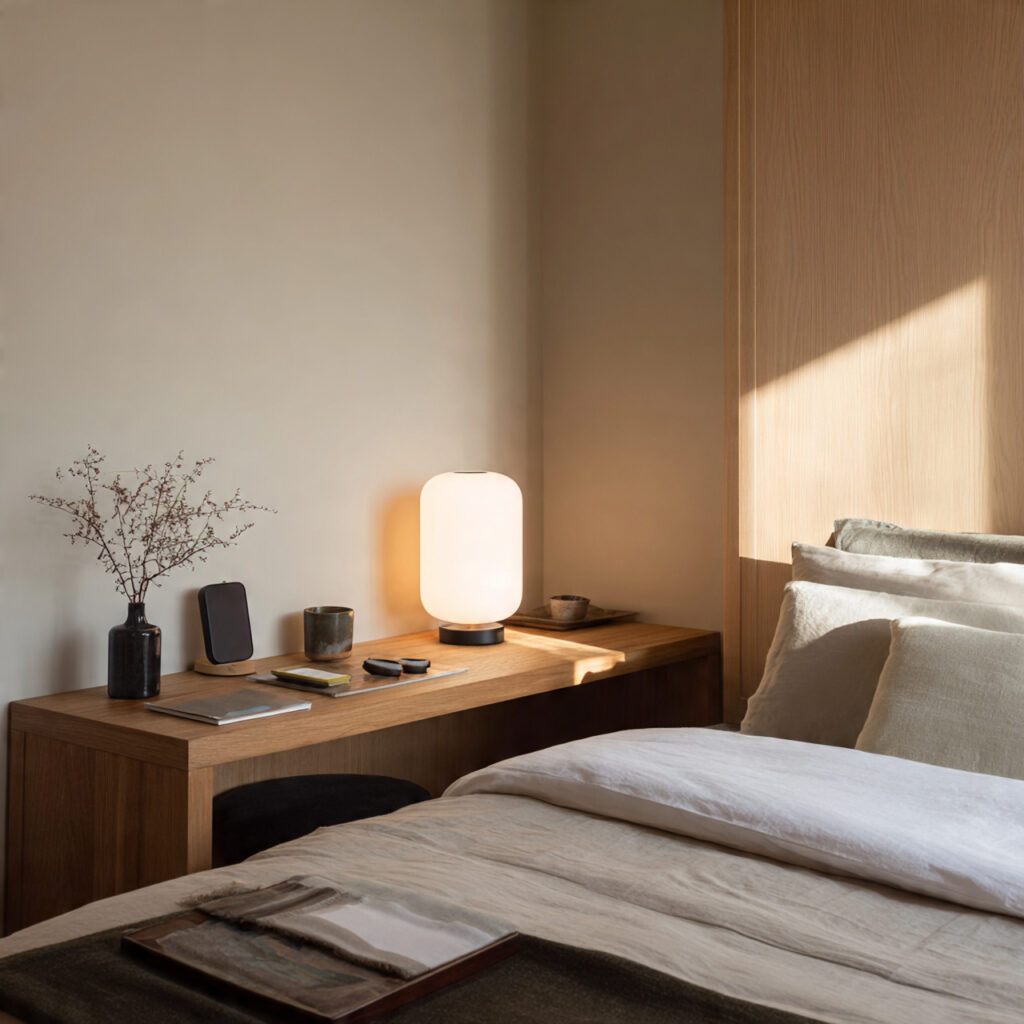
In a Japandi bedroom, technology should be unobtrusive. Limit large screens and electronic devices that distract from relaxation.
If devices are necessary, choose compact, sleek designs that integrate with the furniture. This ensures the bedroom remains a calm retreat rather than a tech hub.
Add Layered Rugs
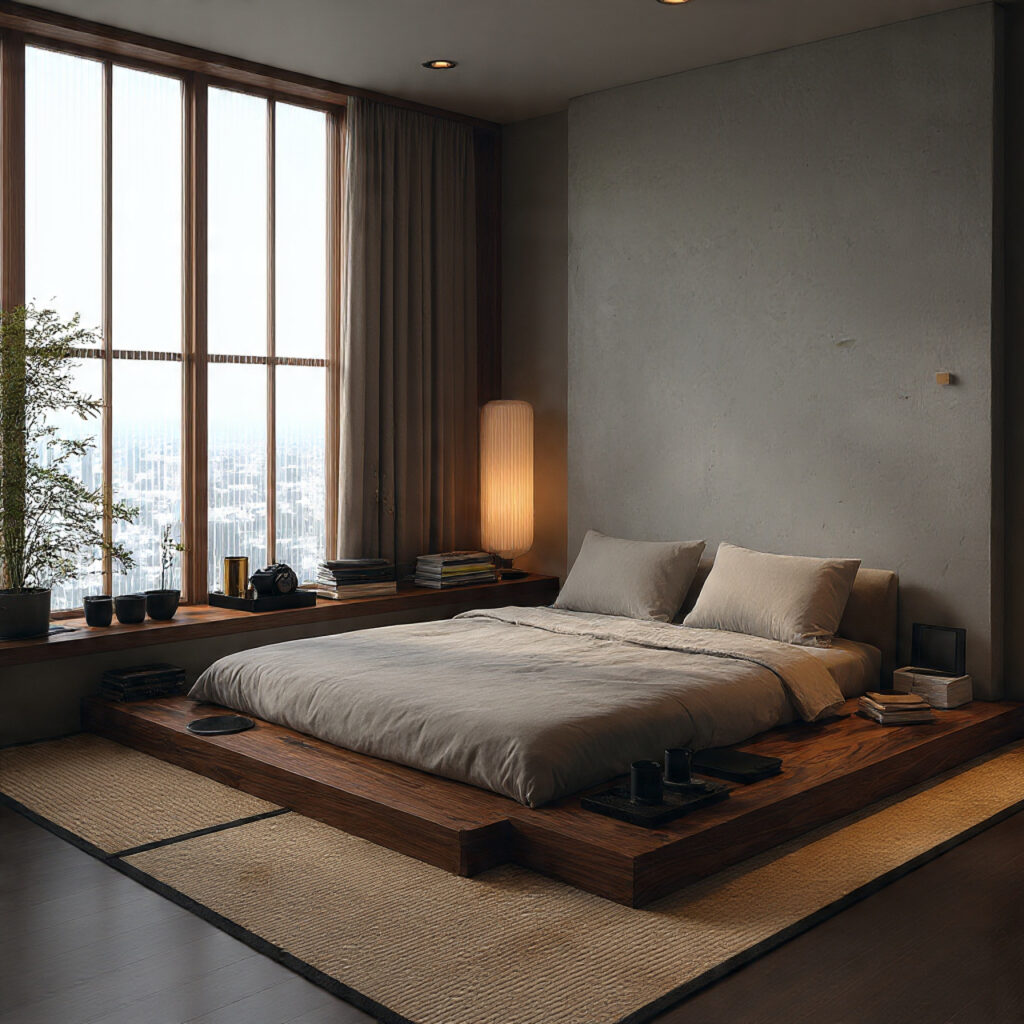
Rugs define areas and add tactile comfort in a Japandi bedroom. Layering a woven rug over a neutral base rug creates visual interest and warmth without clutter.
Choose natural fibers and soft textures for a cozy feel. Keep patterns minimal to maintain simplicity.
Highlight Symmetry and Balance
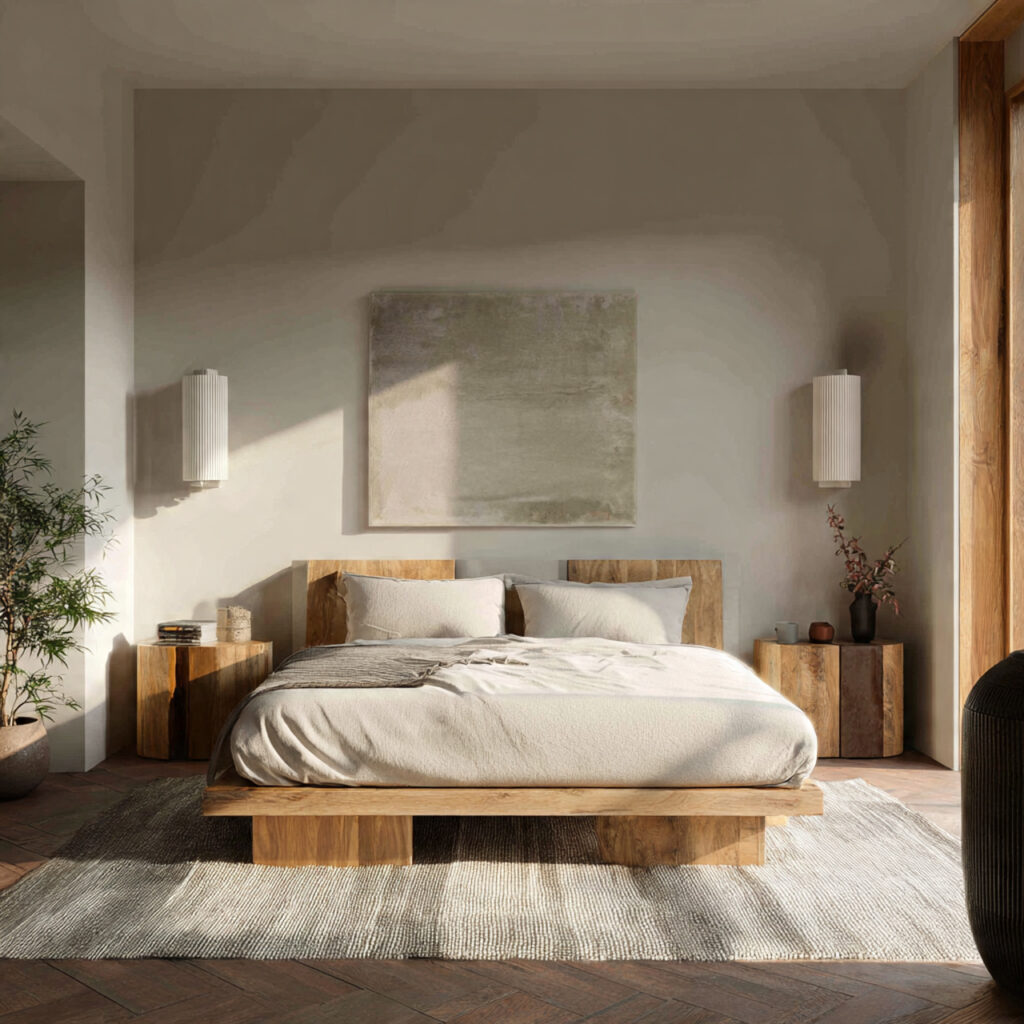
A Japandi bedroom thrives on balance. Furniture placement and décor should create harmony, whether symmetrical or thoughtfully asymmetrical.
Balanced arrangements promote visual calm and make the room feel intentionally designed. Even small details, like aligning pillows or lamps, contribute to the overall serenity.
Introduce Minimalist Storage
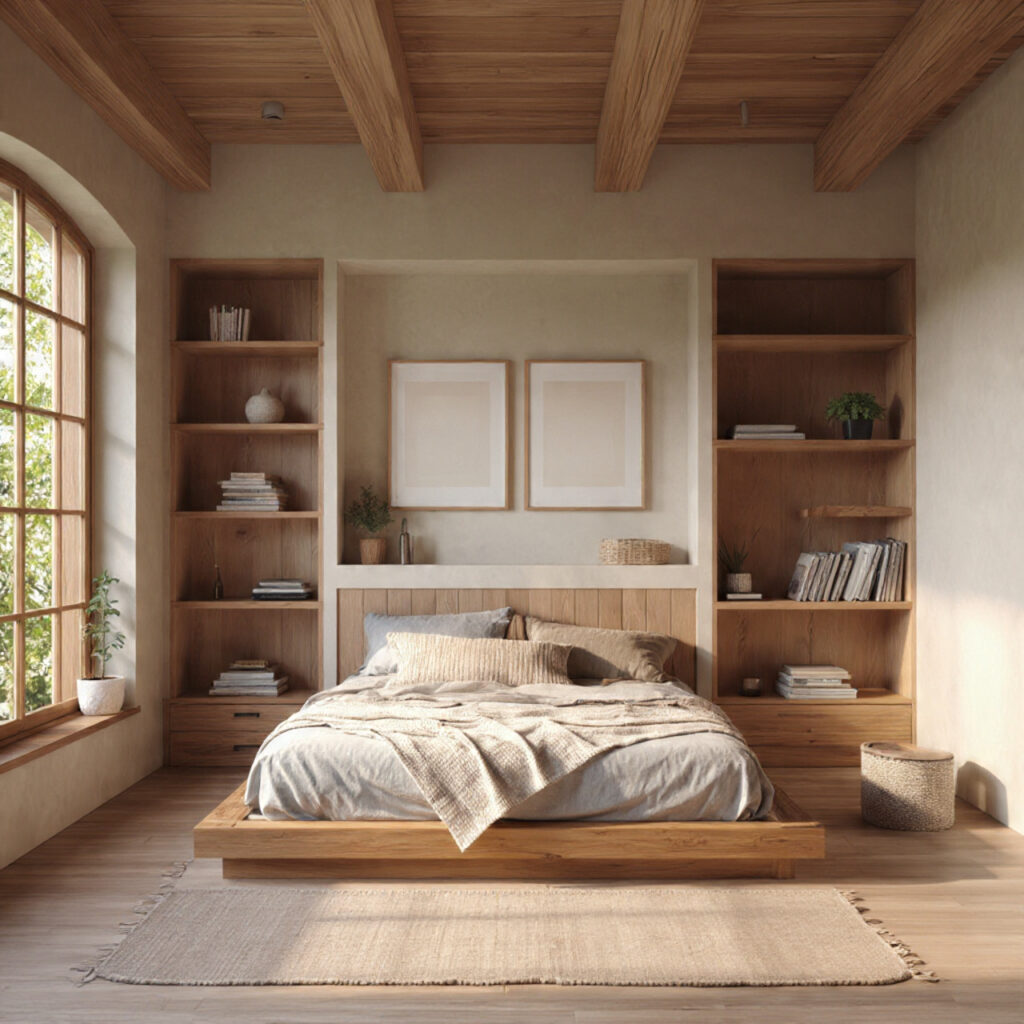
Open shelving or built-in cabinets reduce visual clutter while keeping essentials accessible. Minimalist storage is functional and complements the bedroom’s aesthetic.
Avoid overcrowding shelves with décor. Select a few curated items that add beauty and utility simultaneously.
Incorporate Textured Wall Elements
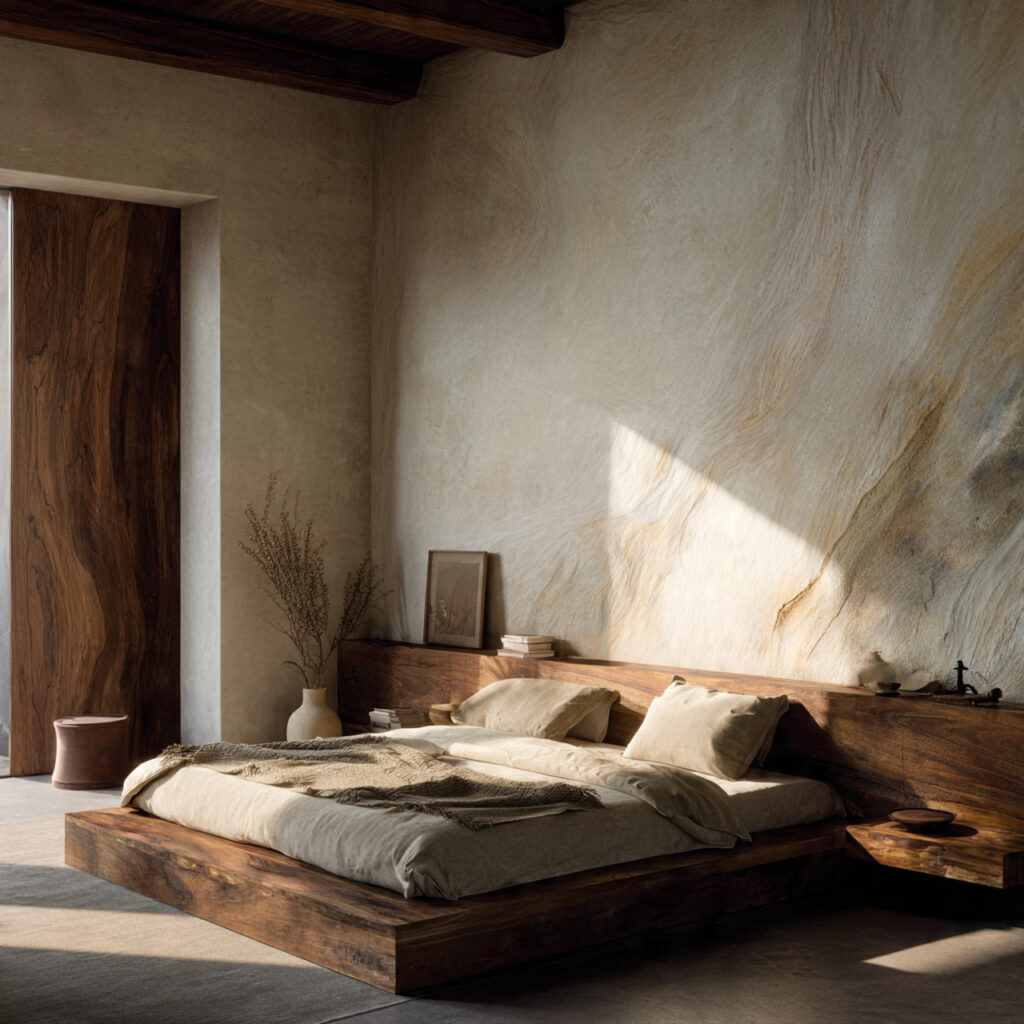
Textured walls, like natural wood panels or subtle plaster finishes, add depth without overwhelming the room. They create a tactile focal point that draws attention softly.
Keep textures neutral and understated, ensuring they complement rather than compete with other elements.
Prioritize Mindful Décor Choices
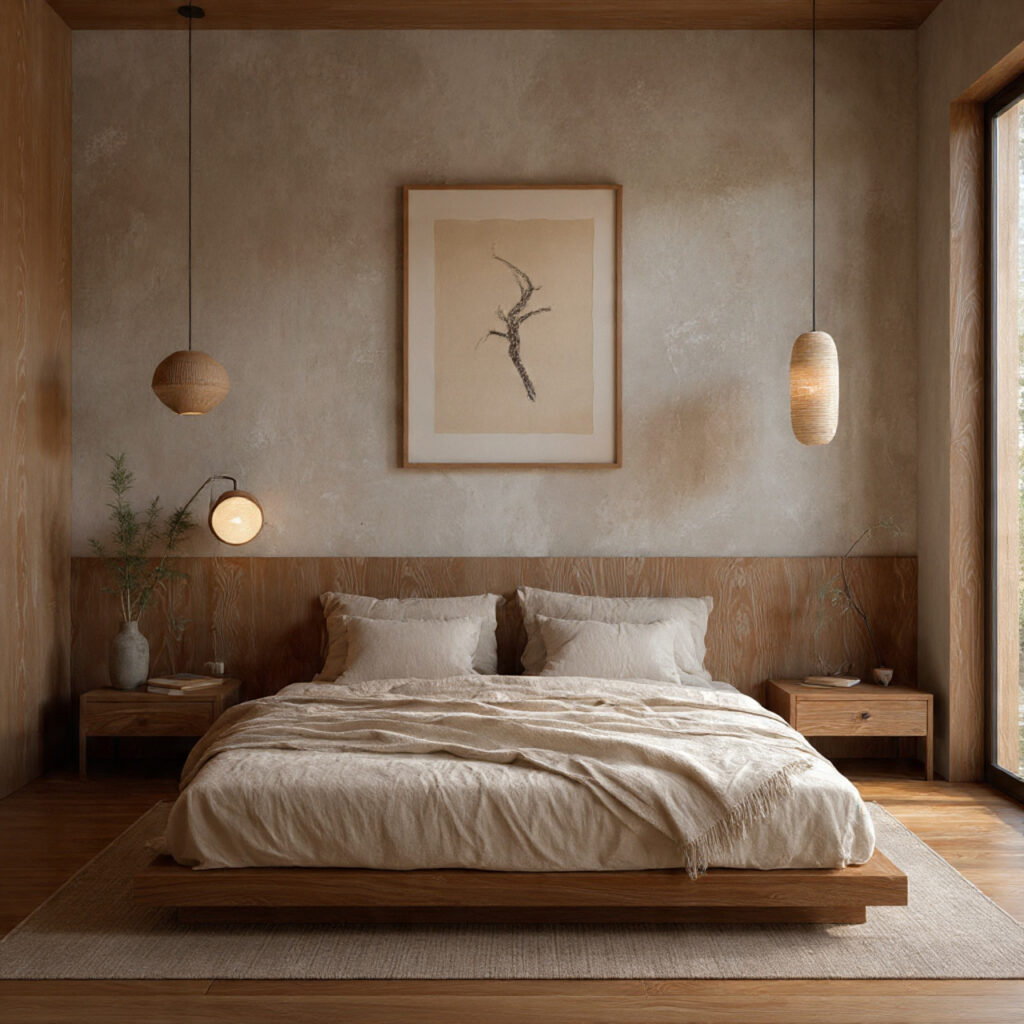
Every item in a Japandi bedroom should serve a purpose or bring joy. Avoid impulsive décor choices that disrupt the minimalist flow.
Curate items intentionally, considering their function, texture, and color. Mindful selection enhances the overall peaceful atmosphere.
Create a Reading Nook
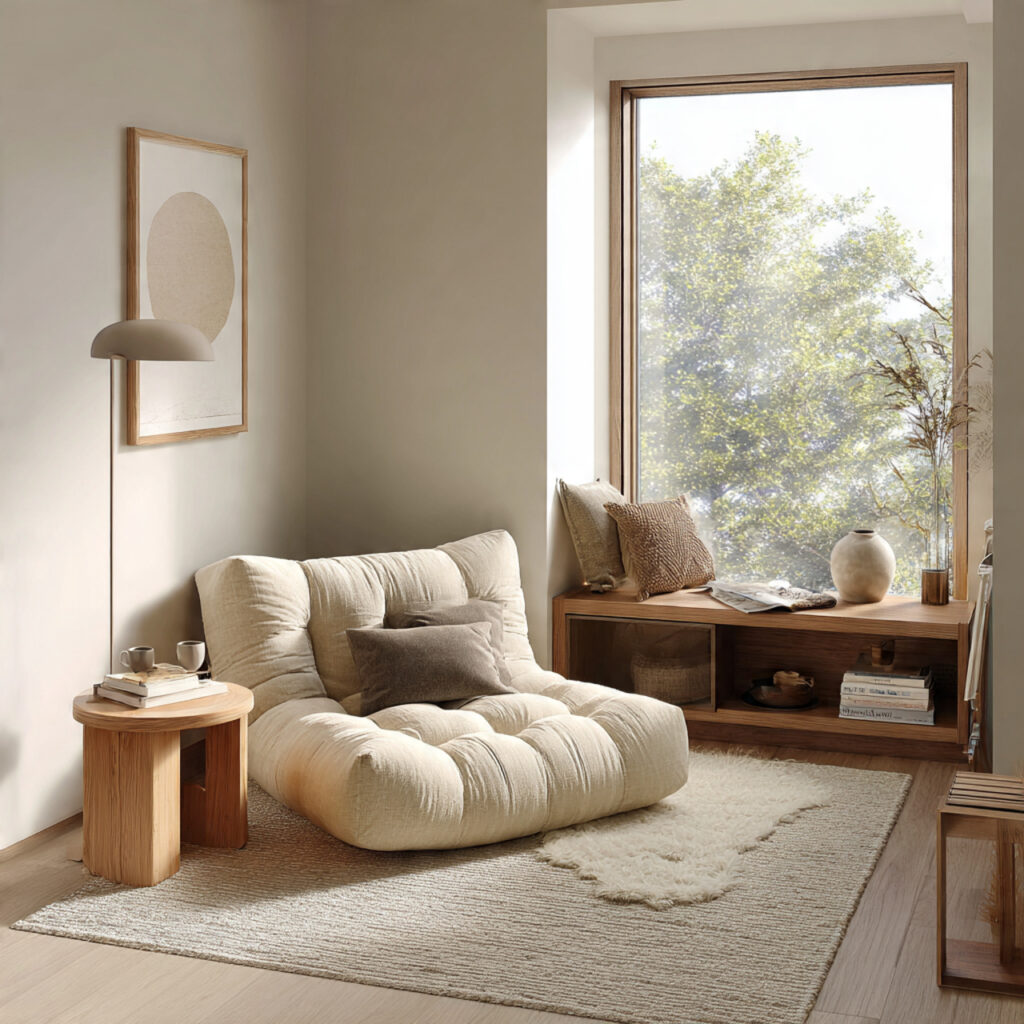
A small corner with a low chair, floor cushion, or bench creates a relaxing reading space. Add a soft throw and a small side table for functionality.
The reading nook embodies Japandi principles by combining comfort, simplicity, and purpose, transforming even small spaces into calm retreats.
Opt for Eco-Friendly Materials
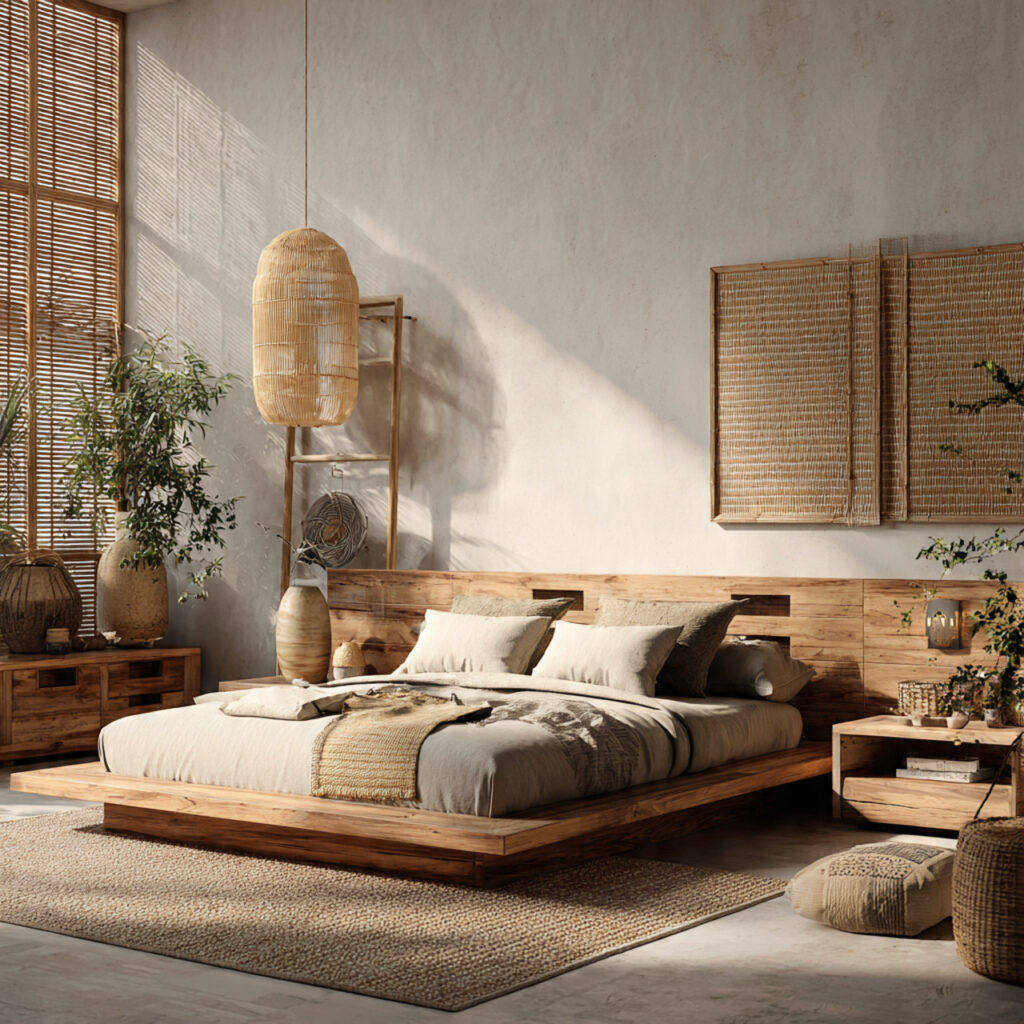
Sustainable furniture and décor align with Japandi values. Bamboo, reclaimed wood, and organic fabrics reduce environmental impact while maintaining aesthetic appeal.
Eco-conscious choices reinforce the mindful, calm lifestyle central to Japandi living.
Introduce Natural Scents
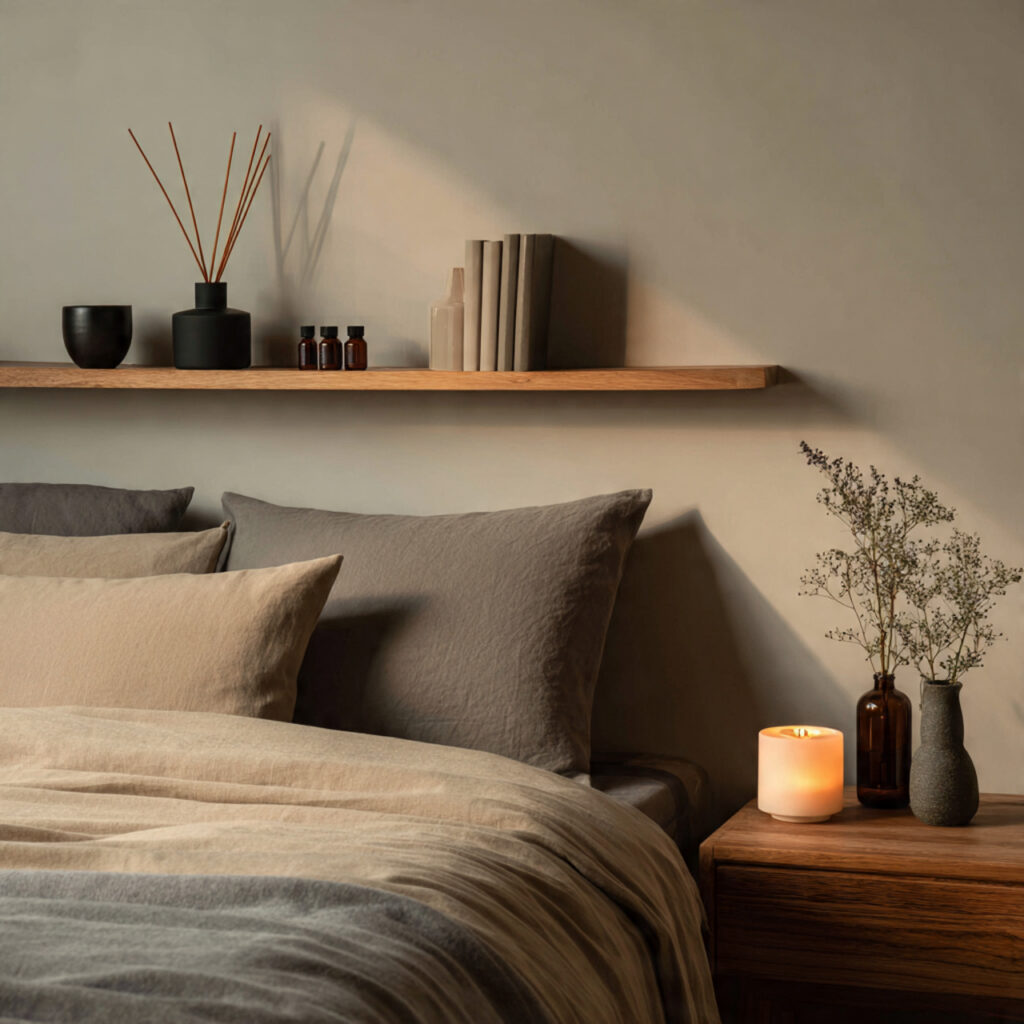
Essential oils, incense, or natural candles enhance the calming environment. Subtle aromas like sandalwood or green tea promote relaxation without overpowering the senses.
Scent complements visual simplicity, creating a full sensory experience that embodies Japandi serenity.
Blend Japanese Wabi-Sabi with Scandinavian Hygge
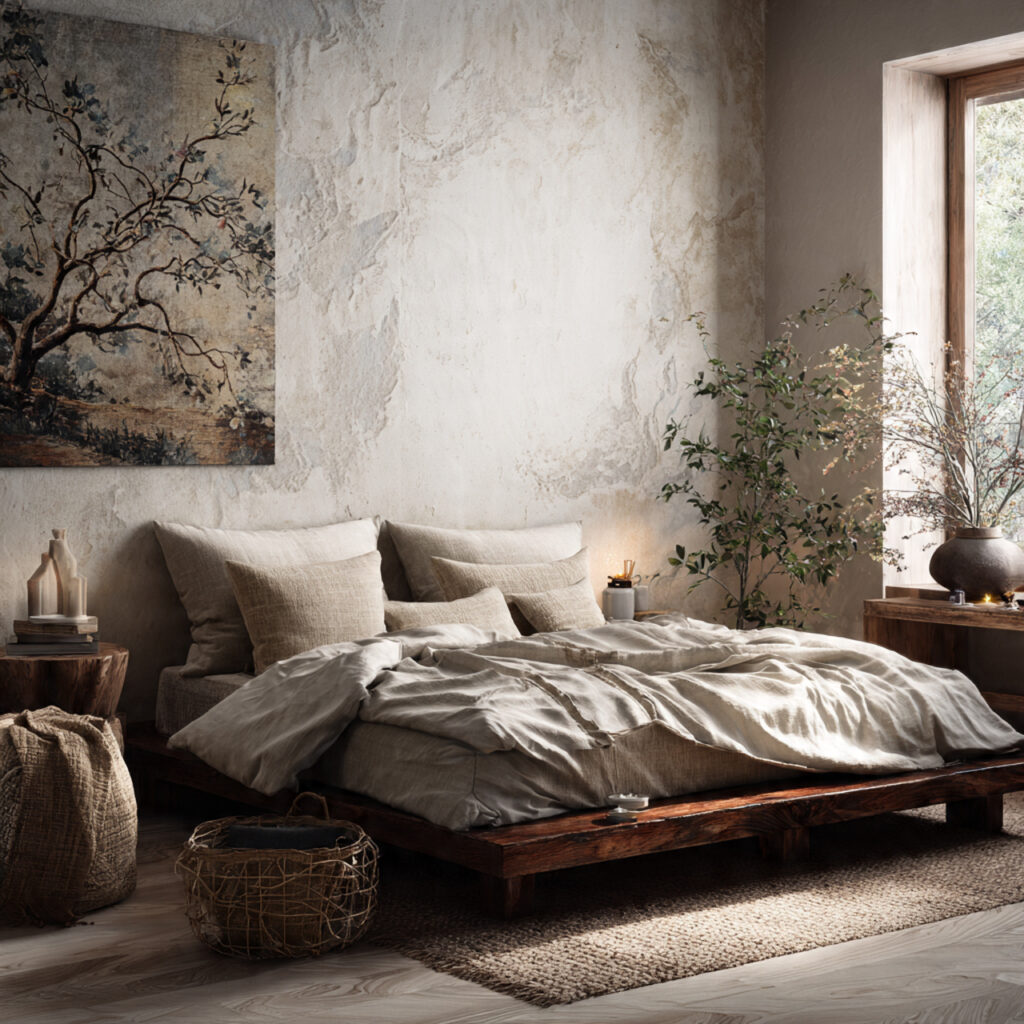
Japandi bedrooms shine when Japanese wabi-sabi imperfection meets Scandinavian hygge coziness. Embrace natural variations in wood, handwoven textiles, and organic shapes.
This fusion creates warmth and personality while keeping spaces uncluttered and serene. It’s the perfect way to make a minimalist room feel lived-in and inviting.
FAQs About Japandi Bedrooms
What size room works best for a Japandi bedroom?
Japandi design works in both small and large spaces. The principles of minimalism and natural materials scale beautifully, allowing even compact rooms to feel open and calm.
Can I mix bold colors in a Japandi bedroom?
Bold colors are generally avoided. Soft, muted accents work best. However, a single muted accent like deep green or terracotta can add warmth without breaking the minimal aesthetic.
Do I need to replace all furniture for a Japandi style?
Not necessarily. Existing furniture can often be adapted with neutral tones, simple décor, and thoughtful placement. Focus on function, material, and simplicity rather than replacing everything.
How do I make a small bedroom feel Japandi?
Use low-profile furniture, light-colored walls, minimal décor, and reflective surfaces like mirrors. Emphasize vertical storage and natural light to maximize space.
Are plants necessary for a Japandi bedroom?
Plants are highly recommended but not mandatory. They bring life, balance, and natural texture, which are key aspects of Japandi aesthetics. Low-maintenance indoor plants work best.
Conclusion
Creating a Japandi bedroom is about more than aesthetics—it’s about cultivating calm, functionality, and mindful living. From natural textures and neutral palettes to low-profile furniture and thoughtful décor, each element works together to form a serene retreat. By blending Japanese minimalism with Scandinavian coziness, you can craft a bedroom that feels spacious, peaceful, and timeless. Small choices, like layered rugs, subtle lighting, and eco-friendly materials, amplify the sense of calm while keeping your space practical and beautiful. A Japandi bedroom is a space that doesn’t just look good—it feels good, inviting rest, clarity, and comfort every day.